Wedding Details You Can Skip
Almost everything at a wedding is optional. Here is what the data and the etiquette people actually say about the details couples agonize over, and a short test for what deserves your money.
By Bejoined · · Updated · 6 min read
The short version
Favors, the staged exit, matching everything, printed programs, and any upsell a vendor cannot explain are all safe to skip. Spend where guests actually notice: food, photos, music, and comfort.
On this page
Somewhere around month three of planning, most couples hit the same quiet realization: the checklist keeps growing, and half of it is things they cannot remember choosing. The favors. The signature cocktail signs. The second set of paper goods. Each one is small, each one costs money, and each one arrived on the list because weddings have a default setting, not because anyone asked for it.
This article is the counter-list. None of these details are bad. The point is that you are allowed to skip anything that does not serve your budget, your guests, or the two of you, and the industry will not always volunteer which details those are. The budget categories couples forget covers the fees that sneak in; this covers the line items that walk in the front door.
The keep test
Three questions, applied to any detail you are unsure about:
- Will guests notice it during the wedding? Not in photos later. During.
- Will either of you care about it in five years?
- Is it there because you want it, or because a checklist, a feed, or a vendor put it there?
Two noes and it is a candidate for cutting. Three and you already know.
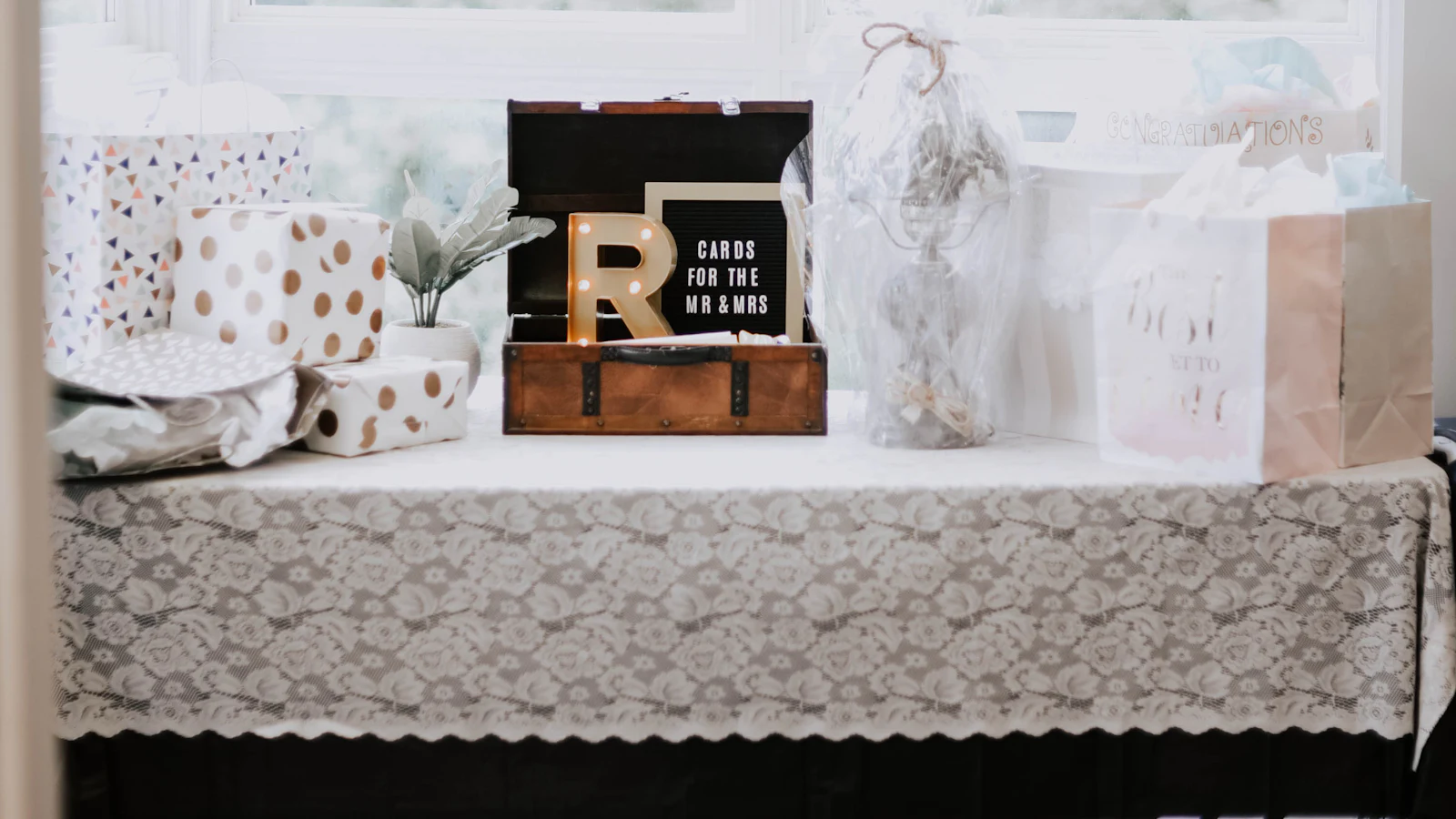
Skip the favors. Really.
The numbers on favors are gentler than the guilt is. Zola’s guidance, updated June 2026, reports that 59% of couples in its 2026 Registry and Gifting Survey planned to give guests a favor, and says outright that skipping favors altogether is fine. So a large minority of couples already skip them, and the ones who do not often watch them get left behind: in The Knot’s favor guide, updated January 2024, planner John Campbell estimates that only about 30% of guests actually take generic items like koozies and shot glasses.
If you love the idea of favors, the same sources agree on the fix: make them edible. Zola’s survey found edible favors were the most popular choice, picked by half of favor-giving couples. Fresh cookies or a boxed late-night snack both work. Eaten beats abandoned.
Skip the matching everything
Matching bridesmaid dresses, matching groomsmen socks, matching robes for photos that take longer than breakfast. Coordinated is a spectrum, and identical is the expensive end of it. Give people a color family and a length, and let them buy something they will wear again. The photos come out better, not worse, because nobody looks uncomfortable, and the money stays in their pockets, which they will remember longer than the color.
Skip the staged exit
Sparkler send-offs photograph beautifully, and they require three things most couples do not have at 10 p.m.: guests who are still there, a venue that allows open flame, and the desire to leave your own party at its peak. Many venues restrict sparklers and confetti outright, which is exactly the kind of rule the venue question list surfaces before you buy four hundred sparklers. Plenty of couples now stage a small “exit” photo mid-reception and then go back to dancing. And staying until the actual end of your own wedding is not a failure of planning. It might be the point.
You are allowed to keep the wedding and skip the production around it.
Skip the transportation upgrades
Someone has to get both of you to the venue. That is the whole requirement. The vintage car that appears for twenty minutes of photos, the stretch limo for a nine-minute drive, the party bus nobody rides twice: these are photo props with engines. The Knot’s hidden costs guide, updated October 2024, puts transporting rented items alone at $50 to more than $500, and vehicle rentals climb from there. If a specific car is a genuine thrill for one of you, keep it and enjoy it. If it is on the list because arrivals feel like they should be dramatic, a clean ride that shows up on time wins.
Skip the printed extras
Etiquette is on your side here, and stricter about less than couples assume. Emily Post’s guide to wedding printed items states plainly that ceremony programs are not required, and that admission cards matter only at landmark churches that attract sightseers. What that leaves is the useful paper: invitations, and, at a seated dinner, place cards, which the same guide calls close to necessary at all but the most casual weddings. So print what routes people: the invitation, the place card, one menu per table if you like. Skip the program nobody keeps and the welcome sign that gets read once, and remember that every extra piece also buys postage and paper.
Skip the traditions that do not fit you
The bouquet toss is a good case study, because the data is public: The Knot’s guide to toss alternatives, updated April 2024, reports that only 31% of newlyweds did a bouquet toss, a 13% decline since 2019, and that couples now skip the bouquet and garter rituals far more than they skip the cake cutting or the first dance. Traditions are a menu, not a contract. Keep the ones that mean something to your families or to you, swap in ones that do (an anniversary dance, a group photo, nothing at all), and let the rest go without a speech about it. If you would cringe during it, your guests will notice the cringe more than they would ever notice the absence.
Skip whatever a vendor cannot explain
A good test for every line item: ask what it is for. “It’s traditional” is not an answer. Neither is “most couples do it.” A vendor who can explain what a charge buys, in one plain sentence, is selling you something real; the upsells that deserve to die in the quote stage are the ones that only survive because nobody asks. This is the same muscle you build when you compare vendor quotes: normalize what is included, ask what changes if you cut it, and watch how the vendor answers.
The short list that earns its keep
So what is left? Less than you would think, and it is the same list at nearly every wedding people describe as great:
- Enough good food, on time. Fed guests forgive nearly everything.
- One great photographer. The single purchase still working in five years.
- Music that fits the room. A dance floor or a string trio, picked on purpose.
- Guest comfort. Shade or heat, seats, working restrooms, drinks that do not require a twenty-minute line.
- The two of you, present. Free, and the only item guests will quote back to you verbatim.
Everything else, every favor and flourish and matching detail, is welcome at your wedding if you want it there. That is the whole test: you want it there. Run the day-of timeline and the budget through that filter once, and both get lighter.
Related articles
Budget
What to Cut From Your Wedding Budget First
Over budget? Cut in this order: guest count, favors, printed extras, flower volume, transportation, and upgrades, before touching the vendors guests notice.
· 7 min read
Read article
Budget
Wedding Budget Categories Couples Forget
The budget lines couples miss: alterations, vendor meals, overtime, delivery fees, taxes and service charges, tips, postage, and day-after costs.
· 5 min read
Read article
Wedding Day
Wedding Day Timeline: What Happens When
A realistic wedding day timeline hour by hour: getting ready, first look, ceremony, photos, dinner, dances, and when vendors arrive and leave.
· 6 min read
Read article