Quick answer
You are betting on the fallback, not the forecast, so price it before you sign. Four things decide whether an outdoor space is safe to book: an indoor room that seats everyone, who makes the call and when, what the fallback costs and whether the contract says so, and how guests find out.
Who this is for
You are looking at an outdoor ceremony, a garden reception, a rooftop, a tented field, and you want to know what you are signing up for. This is the list of questions to answer before booking, not after.
The short version: you are not betting on the weather. You are betting on the fallback. Price the fallback before signing; that is the whole point of this list.
What you are actually deciding
An outdoor space sells you a picture of the good day. The contract, though, is really about the bad one, because the good day needs no plan.
So flip the question. Instead of asking how likely rain is, ask what happens when it comes. The outdoor space works only if the answer is a room you would genuinely accept being married in. If the answer is a room you are quietly dreading, the outdoor space is not the safe booking it looks like.
That is the entire decision, and it is answerable on a tour.
Group 1: the fallback space itself
- What is the indoor alternative, specifically, and can we see it? Ask to stand in it. A named room on a floor plan is not the same as a room.
- Does it seat our full guest count for a ceremony? Not standing, not cocktail-style, not “we would work it out.”
- Is it a real room or a repurposed one? A ballroom is a fallback. A covered walkway, a lobby or a hallway with chairs in it is not.
- If the ceremony moves indoors, what happens to the space the reception was going to use? This is the question that catches single-room venues. If the ceremony takes the reception room, something has to move twice.
- How does the room look with the lights on at 4 p.m. in the rain? Spaces that depend on daylight and open doors are different places on a grey day.
Group 2: the call
- How many hours before the ceremony is the decision made? Get the number. Setup time for the fallback can drive it.
- Who makes it? The planner, the coordinator or the venue, named now and written into the contract. Not the couple, on the morning, in a dress.
- What is the trigger? Probability of precipitation, wind speed, temperature, or someone’s judgment. Any of those is fine. Not knowing is not.
- Can the decision be reversed? Get the answer in advance so a late weather change does not create a last-minute reset.
A five-day forecast is right about 90 percent of the time, a seven-day forecast about 80 percent, and a ten-day forecast only about half the time, per NOAA. How long the venue needs to set up the fallback can decide how early the call has to be made, so ask for that number alongside the deadline.
Group 3: the money
- Does the fallback cost extra? Ask plainly. Sometimes the indoor room is included and sometimes it is a separate rental.
- If a tent is the plan, is it included, and at what price? Then ask what that price includes: sides, flooring, lighting, heating or fans, and who installs it.
- When does the tent have to be ordered, and is that date before or after the weather call? This is the trap. The tent commitment may come before the weather call, which makes the tent deadline the real decision deadline. Check the cancellation and refund terms in writing.
- What is in writing? Put the fallback space, decision deadline, decision authority and any added costs in the contract or signed addendum. Do not rely on a tour conversation or email alone. Our venue packages guide covers what a quoted package does and does not contain.
A tent can provide rain cover, but cold and wind may require sides, flooring, heat and other weather provisions. If your date sits in a shoulder season, ask about heat and sides specifically, because an unsided tent at 45 degrees is an expensive way to be uncomfortable.
Group 4: the guests
- How do guests find out? Choose one place guests can check, usually the wedding website, and make sure the update is easy to reach from a phone.
- If the ceremony moves, how far do guests move? Across a lawn in the rain is different from across a building.
- Is the fallback accessible? Check the actual route for both plans, including stairs, slopes, elevators and distance.
- What about parking and drop-off in bad weather? Covered drop-off is the difference between arriving damp and arriving soaked.
What a good answer sounds like
You are listening for specificity, not reassurance.
A specific answer sounds like: the call is made at noon by our events manager, the room is the Oak Room, it seats 140 for a ceremony, the flip takes 90 minutes, the tent has to be confirmed by the Wednesday before, and it is $2,400 with sides and heat.
A vague answer sounds like: we always make it work, and honestly it has never really been a problem.
The second answer may be sincere. It is just not a plan, and the risk of it sits with you rather than with them.
Put it in the contract
Do not rely on tour answers alone. Put the parts of the rain plan that matter in the contract. Before you sign, the contract should name the fallback space, the decision deadline, the person who decides, and the cost of the fallback if there is one. If a tent is part of the plan, its price and its order deadline belong there too.
If the venue will not write any of it down, that is information. The rest of the tour list is in our venue questions guide, a method for getting through the contract itself is in our contract reading guide, and the day-of sequencing a late flip disrupts is in our wedding day timeline.
Planning in Chicago?
Season matters here, and it is knowable. May is Chicago’s wettest month, September has the fewest wet days of the year, and the normal last measurable snowfall is April 2. The month-by-month numbers, from the National Weather Service, are in our Chicago wedding weather guide.
Mistakes to avoid
- Booking the picture and inheriting the fallback. Stand in the indoor room before you sign, not after.
- Not asking how long the flip takes. Setup time can affect how early the decision has to be made.
- Missing the tent deadline. It may come before the weather call; check the cancellation terms in writing.
- Leaving the decision with the couple. Name someone else, in writing.
- Assuming a tent covers cold. Rain cover is one thing; sides and heat are separate line items and separate questions.
- Keeping the plan in your head. Guests cannot read it there. Put it on the website.
Book the outdoor space you want. Then make sure the day it rains is a day you would still choose, and get that day written into the contract.
Related articles
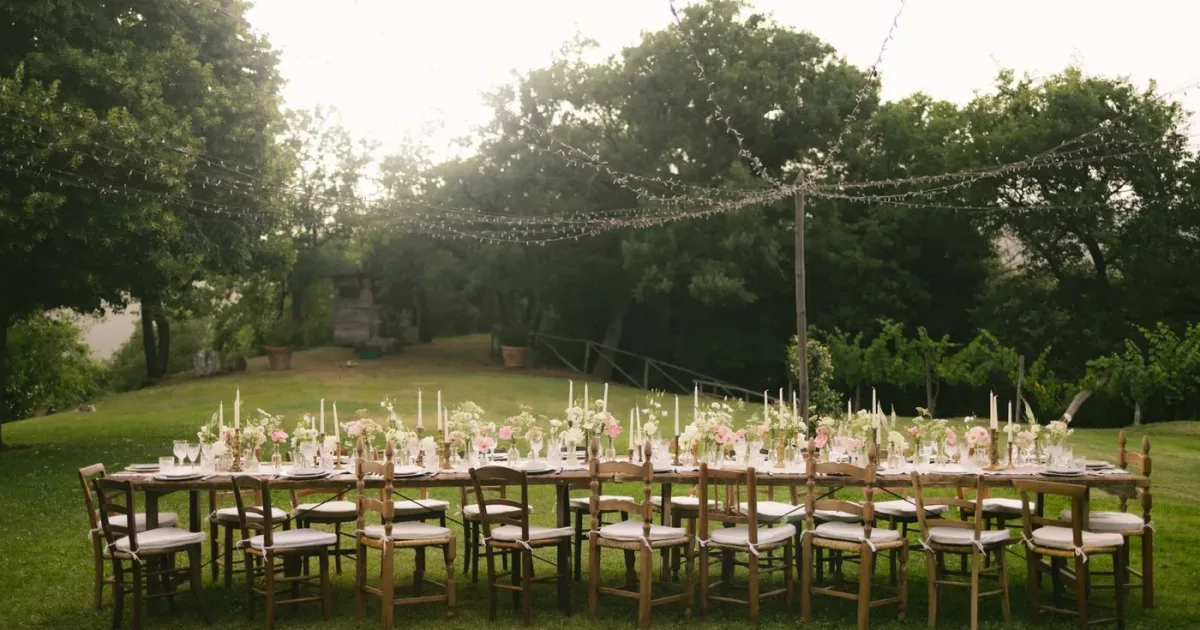
Venues
Questions to Ask a Wedding Venue Before Booking
The venue questions that surface real costs and contract traps: fees, curfews, vendor rules, rain plans, and what happens if you cancel.
· 5 min read
Read article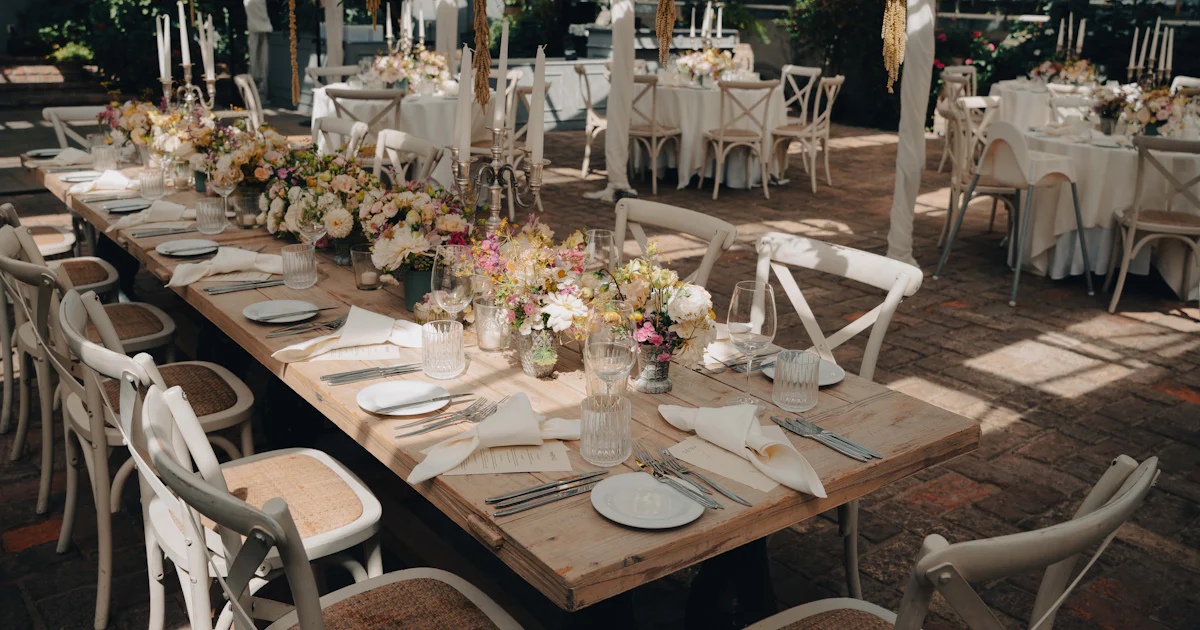
Venues
What Wedding Venue Packages Usually Include
Venue package fine print, decoded: rentals, catering, bar, staffing, access hours, vendor rules, insurance, and the service charge and tax on top.
· 5 min read
Read article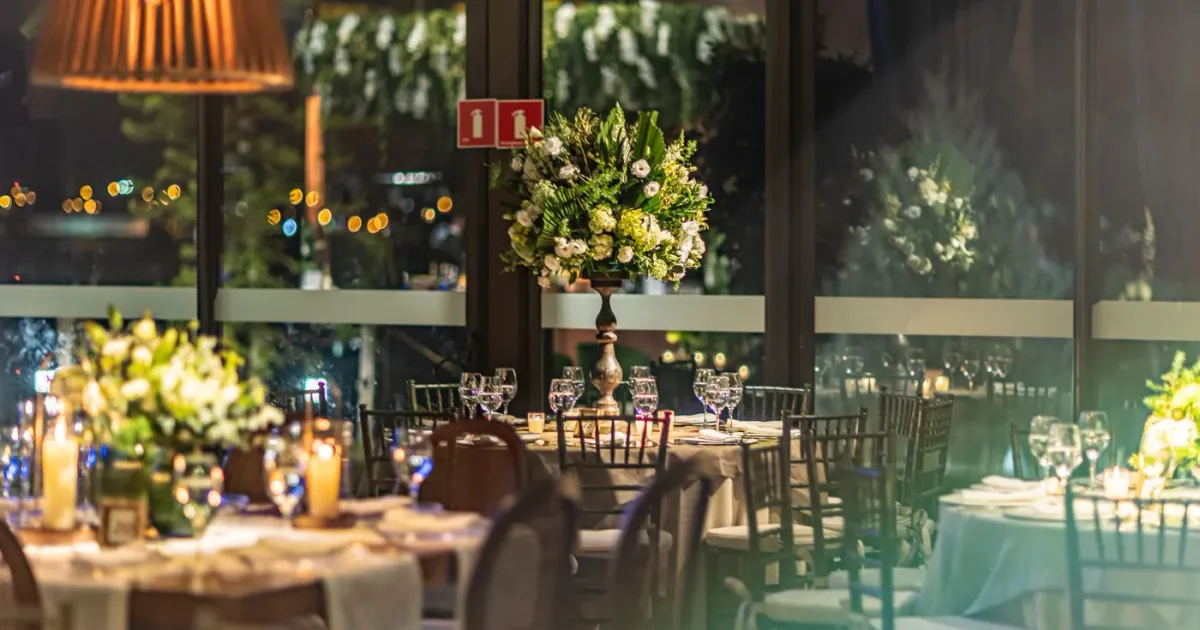
Wedding Day
Wedding Day Timeline: What Happens When
A realistic wedding day timeline hour by hour: getting ready, first look, ceremony, photos, dinner, dances, and when vendors arrive and leave.
· 5 min read
Read article