Adults-Only Wedding Wording, Without Sounding Rude
By Bejoined · · 5 min read
Quick answer
Decide early, put the message on the wedding website FAQ and a details insert (never the invitation itself), address envelopes to the invited adults by name, and answer pushback once, warmly, without relitigating. Specific ages beat "no kids."
Who this is for
Couples who want an adults-only wedding and do not want to start a family feud announcing it. An adults-only celebration is normal and nobody needs to apologize for it. What causes the drama is not the policy; it is guests discovering it late, or wording that reads as a scolding. Both are avoidable, and this article is the wording and the placement, ready to copy.
Decide early, say it early
The Knot’s adults-only etiquette guide, updated February 28, 2024, is direct about timing: announce the policy as soon as you decide, and put it in your wedding website’s FAQ by the time save-the-dates go out, so parents have months to arrange childcare, not weeks. A late surprise is the version of this that goes badly. Guests can forgive a policy; they struggle to forgive a scramble for a sitter ten days before a wedding they already booked flights for.
The decision itself belongs with your guest list rules, made once and applied evenly, alongside the plus-one line. Our guest list guide covers setting those rules together, and the same fairness logic from the plus-one guide applies here: people accept almost any policy that is clear, kind, and the same for everyone.
The envelope does half the work
Etiquette’s quietest tool: the invitation is addressed to exactly the people invited. The Knot’s guide explains the mechanics: with two envelopes, the outer one carries the mailing address and the inner one names each invited guest; with one envelope, put the invited adults’ names on it as explicitly as possible. No children’s names, no “and family.” Traditional guests will read that correctly on its own. Modern guests get the second signal below, because relying on envelope etiquette alone is how you end up with four surprise kids at cocktail hour and our RSVP mistakes guide getting a new example.
The wording, ready to use
Two rules make any version of this sound warm instead of harsh. First, be specific about age rather than saying “no kids”: The Knot’s guide recommends naming the cutoff, because “adults-only” means different things to a parent of a 17-year-old and a parent of a toddler. Second, keep it short. Long explanations read as guilt, and guilt reads as an opening to negotiate.
Lines adapted from The Knot’s examples, for the details insert or website:
- “We love your children, but due to space restrictions, we cannot accommodate guests under 18 on our wedding day.”
- “The couple requests that this be an adults-only celebration.”
- “There will be an adults-only (21+) reception to follow.”
- “Unfortunately, we cannot host children at our wedding. We appreciate your understanding.”
And a slightly warmer website FAQ version in the Bejoined style:
“Is our wedding kid-friendly? We love your little ones, but this celebration will be adults only. We hope the evening off is a gift, not a burden.”
Where each message goes
Placement matters as much as phrasing:
- The wedding website FAQ: the full, warm version, plus practical help such as local sitter or childcare options if you can offer them. The Knot’s guide suggests the FAQ as the home for the policy from save-the-date time onward.
- A details or information insert: one of the short lines above. Requests like this traditionally live on an insert card, not on the invitation itself, which stays reserved for the who, when, and where.
- The RSVP card: reinforce by naming the invited guests and asking them to confirm, so the count is unambiguous.
- Word of mouth: family talks, so brief your parents and wedding party on the exact policy and the exact reason. They will be asked before you are.
When someone asks anyway
Someone will ask for an exception. Answer once, warmly, with the same sentence for everyone: “We kept the whole wedding adults only, so we couldn’t make exceptions, but we would love to have you both there.” Blame the venue capacity or the budget if you want a reason; both are real. The Knot’s guidance for pushback is to hold the line, and for guests whose attendance truly depends on it, consider arranging childcare instead of an exception. A sitter room at the hotel solves the problem the guest actually has, which is not “my child must attend your wedding” but “I cannot leave my child.”
One honest carve-out exists: flower girls, ring bearers, and junior attendants. The Knot’s guide notes couples often include them in the ceremony and then send them off with professional childcare for the reception. That is a role, not an exception, and guests understand the difference when the rest of the policy is even.
Decide the infant question explicitly too. Some couples except nursing babies from an otherwise adults-only rule, and that is workable, but only if you choose it on purpose and say so to the families it affects. An unspoken infant policy is how “adults only” quietly becomes “adults, plus three babies, plus one very insulted aunt.”
What not to write
- Jokes at parents’ expense. The snarky version of this announcement is funny exactly once, to some people, and screenshots outlive weddings.
- Over-apologizing. Three sentences of apology signal that the policy is up for discussion. It is not, so write like it.
- The vague version. “Adult reception to follow” alone is too subtle; some guests genuinely will not catch it. Pair subtle with explicit somewhere else.
- Announcing exceptions. If the ring bearer attends the ceremony, say so in his family’s invitation, not on the website, or every parent reads it as an opening bid.
The five-minute checklist
Decide the age line together. Put the FAQ answer up before save-the-dates go out. Address envelopes to the invited adults by name. Add one short line to the details insert. Brief the parents and wedding party. Then answer every ask with the same warm sentence and change the subject. Clear, kind, and even: that is the entire etiquette.
Related articles

Guests
How to Handle Plus-Ones
Who gets a plus-one, how to word the invitation, how to say no kindly, and what each extra guest actually costs. Practical rules and exact phrasing.
· 5 min read
Read article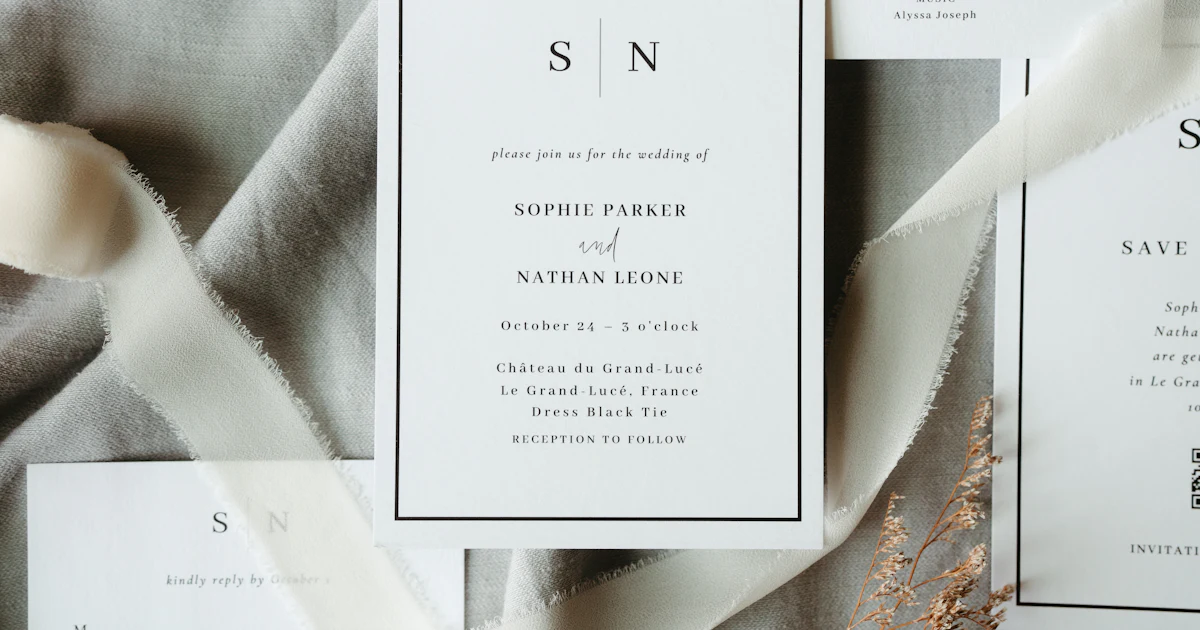
Guests
How to Build a Wedding Guest List
A guest list method that holds up: set the cap from budget and venue, use tiers, agree on plus-one and kids rules, and handle family additions.
· 5 min read
Read article
Guests
Wedding RSVP Mistakes That Cause Problems Later
The RSVP mistakes that surface at the worst time: deadlines set too late, unnamed cards, plus-one ambiguity, and no plan for the guests who go silent.
· 5 min read
Read article