How to Handle Plus-Ones
By Bejoined · · Updated · 5 min read
Quick answer
Spouses, fiances, live-in partners, and long-term relationships always get invited by name. Beyond that, pick one clear rule, apply it evenly, and put plus-one status on the invitation itself. Decline extra requests kindly, once, with the venue or budget as the reason.
Who this is for
Couples staring at a guest list where every single friend is a fork in the road. The plus-one question feels like an etiquette minefield, but it reduces to three decisions: who automatically gets one, where you draw the line for everyone else, and how you communicate both without a group chat incident. This article makes all three decisions with you, with wording you can copy.
First, the math nobody says out loud
A plus-one is a full guest: a meal, a bar tab, a chair, a slice of the per-person minimum. In Chicago, catering alone works out to about $82 a head: Zola’s Chicago wedding guide, updated February 19, 2026, puts catering at $12,372 for 150 guests. Ten open-ended plus-ones is roughly $820 in food before the bar or rentals, and the full per-guest picture in our Chicago cost breakdown runs higher. None of that means plus-ones are bad. It means the policy is a budget decision as much as a kindness one, which is useful, because budgets make honest tiebreakers. Guest count is also the first lever when the total runs high, as covered in what to cut from the budget first.
Who always gets one
The Knot’s plus-one etiquette guide, updated October 14, 2025 with planners Emily Coyne and Irene Katzias, draws the non-negotiable circle: married couples (“it’s best to invite both parties in a married couple, even if you’re closer to one person than the other”), engaged couples, couples who live together, and relationships of more than a year. These are not really plus-ones at all; they are two-person invitations, and both names belong on the envelope.
Two more groups deserve the automatic yes:
- The wedding party. If one person in it is offered a plus-one, every single person in it should be offered the same thing. They are spending money and weekends on you; the date is a fair thank-you, and anything less than all of them reads as a ranking.
- Guests who will know no one. A close friend whose partner is not already involved in the wedding should get the option. The college roommate flying in solo enjoys your wedding less, and leaves earlier, if the answer was no and they know nobody at their table.
Where to draw the line for everyone else
For single guests in newer or casual relationships, there is no rule etiquette forces on you. What matters is that your rule is clear, explainable in one sentence, and applied evenly. Examples that work:
- Partners are invited when we have met them.
- Relationships of a year or more get both names.
- The wedding party and out-of-town guests get plus-ones; local single friends are invited solo.
What does not work is deciding person by person, mood by mood. Uneven rules are the actual etiquette violation, because they get compared. Guests forgive a policy; they remember an exception. Build the list and the rule together using our guest list guide, which walks through the tiers this decision sits inside.
How to communicate who is invited
The invitation itself is the message, so make it precise:
- Known partners: use their name. Emily Post’s invitation guidance is direct here: use the names of all “and guests” when possible, because it is much warmer and more welcoming than the generic phrase. It also removes all ambiguity about who is invited.
- A true open plus-one: address the invitation to your guest, and add “and Guest” where a name would go, or state it on the RSVP card. The Knot’s guide offers simple RSVP wording: “You are invited to bring one guest.”
- No plus-one: address the invitation to exactly the people invited, and nothing more. The absence of “and Guest” is the etiquette-standard signal, and your RSVP card can reinforce it by naming the guest and asking them to confirm.
How to say no without a fight
Do not print the refusal on the invitation. Coyne’s warning in The Knot’s guide is that stating it outright reads as telling guests you assume they have bad manners. Put the policy on the wedding website instead, in one kind sentence. The guide’s suggested wording works as-is:
Because of limited venue space, we unfortunately can’t accommodate plus-ones beyond those named on the wedding invitation.
When someone asks anyway (someone will), answer once, warmly, with the same reason: “We’re so glad you’re coming. We had to cap the list for the venue and budget, so we couldn’t add plus-ones beyond partners, and we didn’t make exceptions.” Blame the venue capacity, the budget, or the fire code, all of which are real. Do not blame the person, and do not relitigate. One guest getting a quiet exception is how three more find out.
Children are a separate policy
Kids are not plus-ones, and mixing the two decisions muddies both. Decide the children question on its own (all kids, family kids only, or adults only), then apply the same communication rules: the envelope names exactly who is invited, and the website carries one kind sentence so nobody has to ask. If you are going adults-only, wording that works: “We love your little ones, but this celebration will be adults only. We hope the evening off is a gift, not a burden.” Expect a couple of follow-up questions from traveling parents, answer them warmly and consistently, and where you can, point them to a babysitting option near the venue. The same principle runs through this whole article: people accept almost any policy that is clear, kind, and applied to everyone.
Edge cases, handled
- A relationship that started after invitations went out. You are allowed to add a name late if space and budget agree. Consistency applies to the rule, not to the calendar.
- A guest RSVPs for two without asking. Call, warm and direct: the reservation is for them alone, and you are sorry the card was unclear. Awkward for two minutes, resolved forever.
- Parents lobbying for someone’s date. The rule you wrote in one sentence earns its keep here. Recite it, offer no exception, and let the rule take the blame.
Related articles

Guests
Adults-Only Wedding Wording, Without Sounding Rude
How to say no kids at a wedding kindly: where the message goes, exact wording for the website and insert card, and how to handle the pushback.
· 5 min read
Read article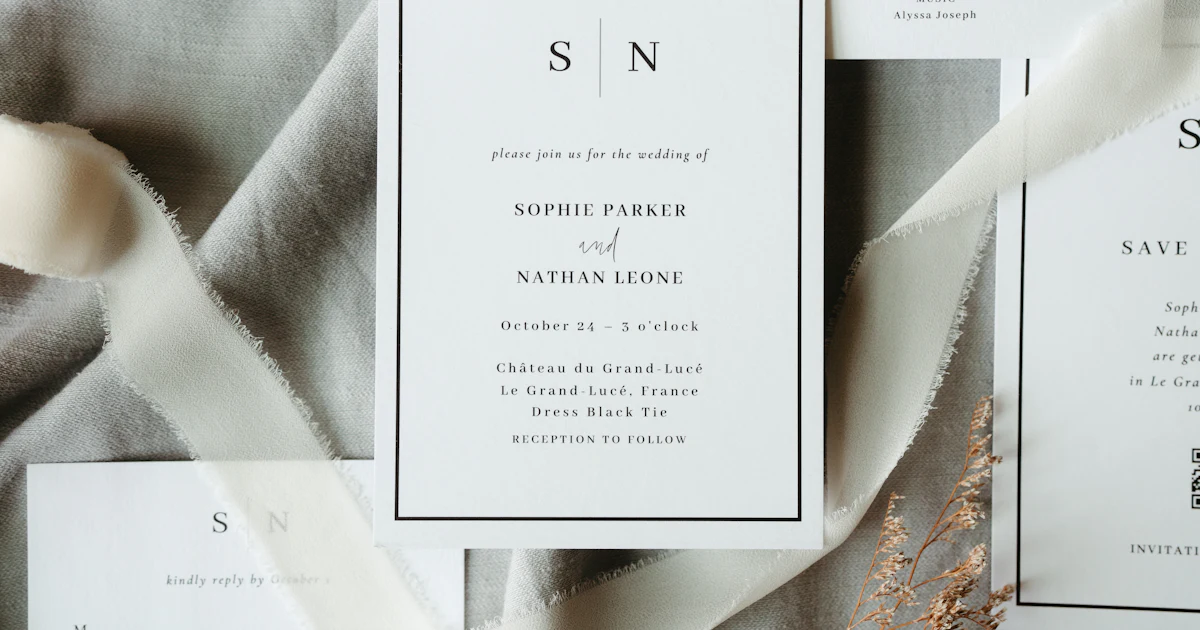
Guests
How to Build a Wedding Guest List
A guest list method that holds up: set the cap from budget and venue, use tiers, agree on plus-one and kids rules, and handle family additions.
· 5 min read
Read article
Guests
Handling Family Opinions in Wedding Planning
A practical system for family opinions: decide your non-negotiables, give real jobs, set money terms early, and use steady wording that ends debates kindly.
· 5 min read
Read article