Hotel Wedding vs Banquet Hall vs Loft Venue
Hotels sell convenience. Banquet halls sell infrastructure. Lofts sell freedom. What each one costs you in money, rules, and rentals.
By Bejoined · · Updated · 5 min read

The short version
Hotels sell convenience: everything and everyone in one building, at the highest price and the tightest vendor rules. Banquet halls sell event infrastructure with in-house catering at predictable per-person prices. Lofts sell freedom and style, and you rent everything else. Pick by what you want to control.
On this page
Who this is for
Couples comparing venue types before touring anything, which is the right order: knowing the model saves you from touring rooms whose deal structure never fit. These three types dominate city wedding shopping, and the honest difference between them is not beauty. It is what is included, what is allowed, and who does the work.
The comparison at a glance
| Hotel | Banquet hall | Loft | |
|---|---|---|---|
| Usually included | Ceremony/reception space, catering, bar, tables, chairs, linens, staff, a getting-ready suite | Space, in-house catering with set menus, tables, chairs, basic linens, event staff | The space, sometimes tables and chairs, little else |
| Catering | In-house, required | In-house, sometimes outside caterers allowed | You bring a caterer |
| Guest logistics | Rooms upstairs, one address all weekend | Parking usually easy, lodging separate | Lodging and parking are your problem to solve |
| Style control | Lowest: the room is what it is | Middle: package decor, some flexibility | Highest: a blank room you design |
| Cost shape | Highest per person, fewest surprises | Predictable per-person packages | Lower rental fee, then rentals and staffing stack on top |
| Best for | Out-of-town-heavy guest lists, one-building convenience | Big lists on a defined budget | Style-first couples with planning energy or a planner |
The rest of the article is the reasoning behind each column.
Hotels: paying for gravity
A hotel wedding puts the ceremony, reception, guest rooms, and morning-after brunch in one building. The Knot’s venue-type guide (Chapelle Johnson, updated December 5, 2024) calls hotels the one-stop shop of wedding venues and puts 6 percent of couples in one, per its 2023 Real Weddings Study. The convenience is real: out-of-town guests take an elevator home, packages typically include a suite to get ready in, and an in-house banquet team runs the machine. The tradeoffs are the price of all that gravity: hotel packages sit at the top of the per-person market, vendor rules are usually the strictest (in-house or approved-list only), and your event shares the building with strangers unless you buy it out. If most of your list is flying in, hotels solve problems you would otherwise pay to solve separately, starting with the room block.
Banquet halls: the event machine
Banquet halls exist to host events and nothing else, which is their entire pitch. They are also the most popular choice in the country: The Knot’s guide puts 20 percent of couples in a banquet hall, more than any other venue type, and credits them with event-ready interiors and all-inclusive packages. Most run in-house catering on set menus, and some allow outside caterers. Everything about the model favors predictability: per-person packages, staff who have run your exact headcount hundreds of times, and infrastructure (parking, restrooms, coat check, dance floor) already sized for weddings. The tradeoffs are visual and structural: the decor baseline is the package, menus are the menu, and the room may host another wedding in the next hall over. For large guest lists on a defined budget, the hall’s math is hard to beat, as long as you price the package fine print honestly.
Lofts: freedom, invoiced separately
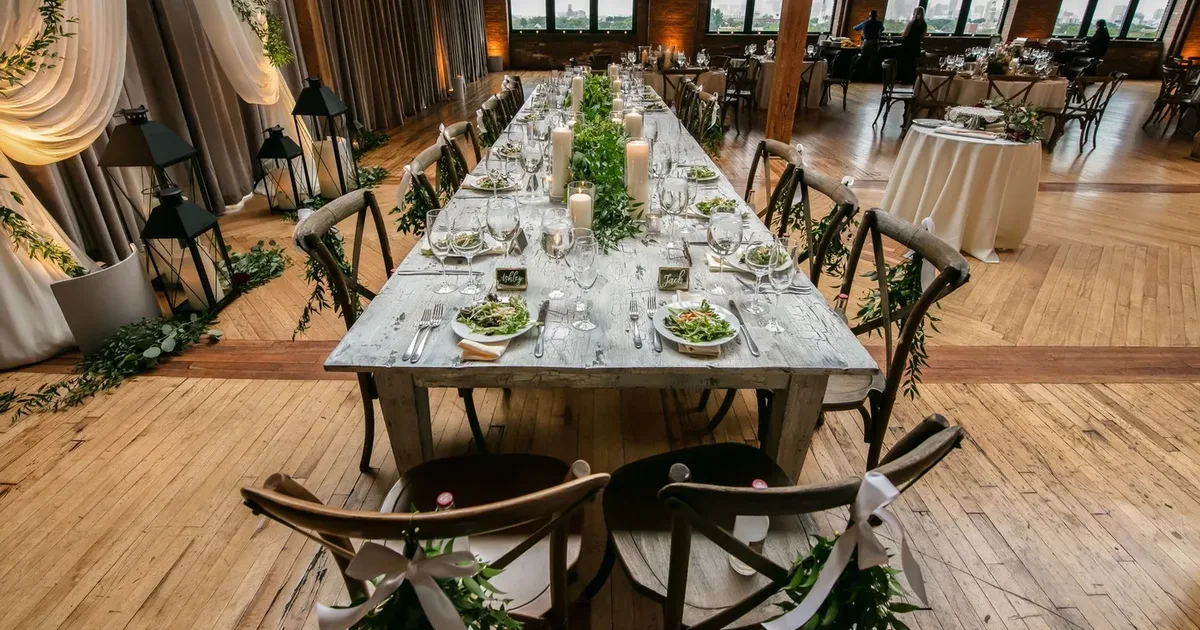
The loft is the style pick: open industrial space, tall windows, exposed brick, city views, a room that photographs like nowhere else in your friend group. It is also the rarest of the three: The Knot’s guide puts 2 percent of couples in a loft or rooftop space, and describes the draw as the city-chic look. The structural truth: a loft is usually a raw space, and Zola’s venue guide (February 5, 2024) draws the line between full-service venues and the rest, so the rental fee buys walls and little else. Tables, chairs, linens, catering, bar service and licensing, staffing, sound equipment, and sometimes restrooms trailers arrive on separate invoices you coordinate. Capacity also runs smaller than halls and hotels. Lofts reward couples who want control and have the planning appetite (or planner) to exercise it, and they quietly punish couples who assumed the rental fee was the budget.
The question that exposes each type
Every venue type has one question that surfaces its true cost fastest:
- For hotels: “What does the room block require, and what happens if my guests do not fill it?” Attrition clauses (where you owe for unbooked rooms) turn the hotel’s biggest perk into a liability if your list books elsewhere. Ask for the block terms in writing alongside the wedding package.
- For banquet halls: “How many events do you run on my date, and what exactly can change about the menu and the room?” The answers tell you whether you are buying a wedding or a slot, and how much of the package is actually adjustable.
- For lofts: “Can you list everything the rental fee includes, and everything your last three couples had to bring in?” The second half of that question is the budget. Add the sound limits, freight elevator windows, and the vendor insurance certificates the building requires, because your caterer and band will bill you for the answers.
All three go in writing, next to the standard venue question list.
How to actually decide
Three questions settle most of it:
- Where are your guests sleeping? Mostly out-of-town list: the hotel’s convenience is worth real money. Mostly local: you are paying for elevators nobody needs.
- What do you want to control? If catering quality and decor freedom are top priorities, the loft’s blank canvas earns its logistics. If you want decisions made for you, the hall and hotel sell exactly that.
- What does the all-in math say? Price each candidate as a total: venue fee plus catering plus every rental the space does not include plus the fee stack. A $4,000 loft and a $12,000 hotel package can land within a thousand dollars of each other once the loft’s rentals are real numbers. Our quote comparison method works on venues too.
Whichever type wins, tour with the same venue question list and get the all-in quote in writing. In Chicago, the venue-choosing guide adds the local layer: neighborhoods, seasons, and the booking clock.
Related articles
Venues
How to Choose a Wedding Venue in Chicago
A Chicago venue decision method: guest count first, real all-in pricing, season and neighborhood tradeoffs, and the local logistics couples miss.
· 5 min read
Read article
Venues
What Wedding Venue Packages Usually Include
Venue package fine print, decoded: rentals, catering, bar, staffing, access hours, vendor rules, insurance, and the service charge and tax on top.
· 5 min read
Read article
Venues
Questions to Ask a Wedding Venue Before Booking
The venue questions that surface real costs and contract traps: fees, curfews, vendor rules, rain plans, and what happens if you cancel.
· 5 min read
Read article