How to Choose a Wedding Venue in Chicago
A decision method for Chicago venues: guest count first, real all-in pricing, season and neighborhood tradeoffs, and the local logistics couples miss.
By Bejoined · · Updated · 5 min read
The short version
Draft the guest count, set the venue budget from your total, pick a season before a date, then shortlist by neighborhood and venue type. Tour with one question list, compare all-in quotes, and book 12 or more months out for peak Saturdays.
On this page
Who this is for
Couples planning a Chicago wedding who want a method for the biggest single decision, not a listicle of pretty rooms. We have not toured these venues for you (that is what The Visit is built to do, one business at a time). What this guide can do is give you the decision order, the Chicago-specific tradeoffs, and the numbers worth knowing before any tour.
Start with the two numbers, not the room
Zola’s venue-selection guide, updated February 5, 2024, runs budget first, then dates, then guest count. We would put the guest count alongside the budget rather than third, because the count determines which rooms are even possible. Either way, both numbers come before the room. In Chicago they carry real weight. The Knot’s 2026 Real Weddings Study puts the average Chicago wedding at $54,000 with the venue as the largest single line, and Zola’s Chicago guide (updated February 19, 2026) puts catering at $12,372 for 150 guests, about $82 a head, so a venue that fits 30 extra people is also an invitation to spend thousands more. The Chicago cost breakdown has the full math; the short version is that the guest count you bring to venue shopping is the most expensive number you own. Build it honestly first with the guest list method.
Pick a season before a date
Decide the time of year before venue research, and hold several candidate dates rather than one. Chicago makes that worth double. Peak season runs roughly May through October, when the lakefront weather is at its best and demand (and pricing) peaks; a winter date trades outdoor photos for real negotiating room and far better availability. Two local checks before committing to any date: the city’s festival and marathon calendar, which can double hotel rates for your traveling guests, and your own calendars, per the first-month mistakes guide.
Choose a neighborhood logic, not just a room
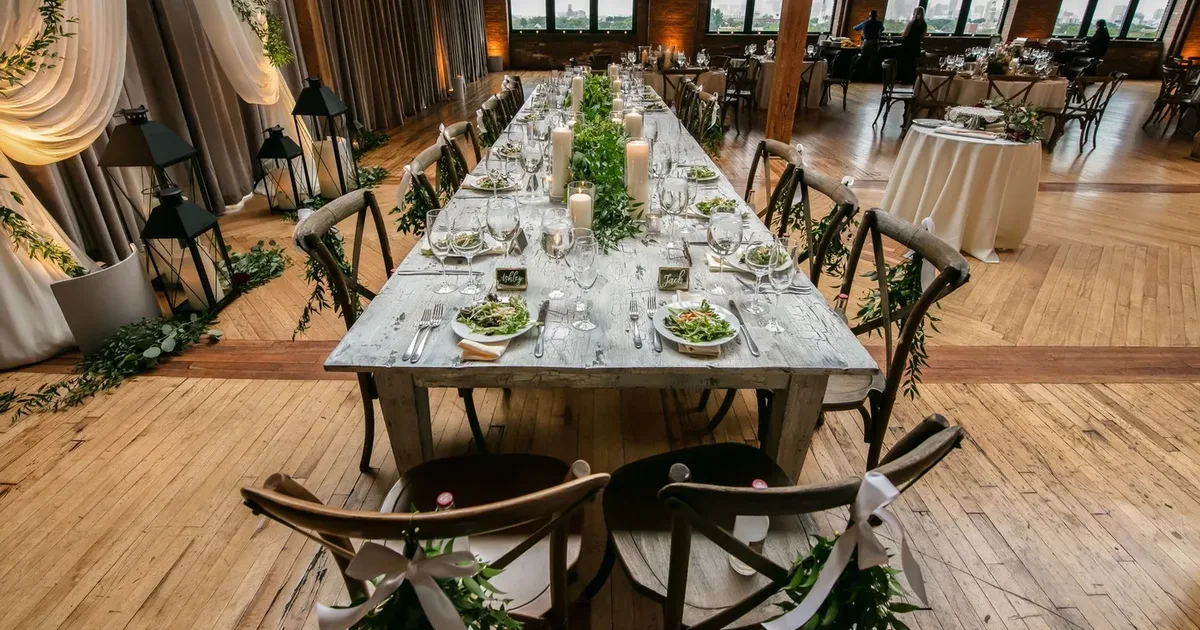
Chicago venue shopping is really neighborhood shopping. Downtown and River North mean skyline views, hotel convenience, and the highest price tags. The West Loop’s converted industrial spaces trade turnkey service for style flexibility. Lincoln Park, Logan Square, and Wicker Park run from classic to deliberately offbeat at a range of budgets. None of these is the right answer; the useful question is where your guests are staying and how they get from ceremony to reception. A venue that is twenty minutes from the guest hotel by a straight bus route beats a slightly prettier one that requires forty guests to solve Chicago parking individually.
Know which venue type you are actually buying
The same budget buys very different things depending on the model. Zola’s guide draws the line that matters: full-service venues bundle in-house catering and rentals (tables, chairs, linens) into their pricing, while raw spaces hand you freedom and a long rentals to-do list. Chicago has all of it: hotels, banquet halls, lofts, restaurants, museums, and greenhouses. Our hotel vs banquet hall vs loft comparison walks through the tradeoffs, and what venue packages usually include decodes the fine print. The rule either way: compare venues on the all-in number, not the rental fee, because a cheap room with mandatory catering minimums can out-cost an expensive room with none.
One address or two: decide before you shortlist
Chicago couples often split the day: a ceremony at a church, temple, or courthouse, then a reception across town. It is a fine tradition with a logistics bill attached. Two addresses mean transportation for the wedding party, directions and parking solved twice, a dead gap in the guest experience if the timeline sags, and sometimes a shuttle line in the budget. One address means simpler everything and one fewer contract. Neither is wrong, but the choice changes which venues make your shortlist (does the reception venue have a real ceremony space, or a repurposed corner?), so make it before touring, together with whichever officiant or congregation matters to your families. If the two-address version wins, budget the gap deliberately: a cocktail hour that starts when the first guests arrive beats ninety confused minutes of guests improvising in a hotel bar.
Tour like an auditor, kindly
Book tours at your actual ceremony time of day where possible (it is the only way to judge light and noise honestly), and bring the same question list to every venue: the venue question list covers the all-in quote, required and banned vendors, curfews and overtime, the rain plan, and cancellation terms. Chicago-specific items to add: load-in rules for city buildings (freight elevators and tight windows add vendor labor charges), whether the outdoor space has a real weather backup rather than a hopeful one, and what the room feels like when it is 95 degrees or 5 degrees outside, because your date might be either.
Book on Chicago time
Zola’s booking guidance, updated October 13, 2025, puts the venue 9 to 14 months out, and 12 to 14 for peak months. Big-city demand tightens that: sought-after Chicago venues and peak Saturdays commonly book 12 to 18 months ahead, and our own guides warn that popular city vendors sell out earlier than national baselines. If your engagement is shorter, do not panic; flexibility on the day of the week and season recovers most of the disadvantage, and the 6-month timeline sequences a compressed search. Either way the venue signs first, per the booking order, because every other vendor needs its date.
Before you sign
The tour convinces you; the contract commits you. Read it for the all-in total, the payment schedule, the cancellation and postponement terms, and every fee named in budget categories couples forget, and treat anything promised verbally as unwritten until it appears on paper. Our guide to deposits, payments, and contracts covers the clauses line by line. A Chicago venue that answers all of this clearly, in writing, on the first ask, is telling you what the next year of working together will be like. That answer is worth more than any chandelier.
Related articles
Venues
Questions to Ask a Wedding Venue Before Booking
The venue questions that surface real costs and contract traps: fees, curfews, vendor rules, rain plans, and what happens if you cancel.
· 5 min read
Read article
Venues
Hotel Wedding vs Banquet Hall vs Loft Venue
Hotel, banquet hall, or loft: what each venue type includes, what each costs you in rentals and rules, and which fits your guest list and priorities.
· 5 min read
Read article
Venues
What Wedding Venue Packages Usually Include
Venue package fine print, decoded: rentals, catering, bar, staffing, access hours, vendor rules, insurance, and the service charge and tax on top.
· 5 min read
Read article